Keith’s Aurora Photos
Photos not only show you the Lights — they also tell you something about when, where, and how you might see them and get a photo of your own. I have hundreds of photos, and I chose these to give you an idea of the different things you might see. Notice that many of my favorites were taken in March. (The book explains why March can be a good month for aurora hunting.)
I have intentionally not edited any of these photos to enhance their color or brightness. They were all taken with my phone.
However, a camera can capture light and color that your eyes may not pick up. That means even an unedited photo can look different from what you see in person. You’ll find an example below.
Click each photo to see the full image, and read my notes for each set.
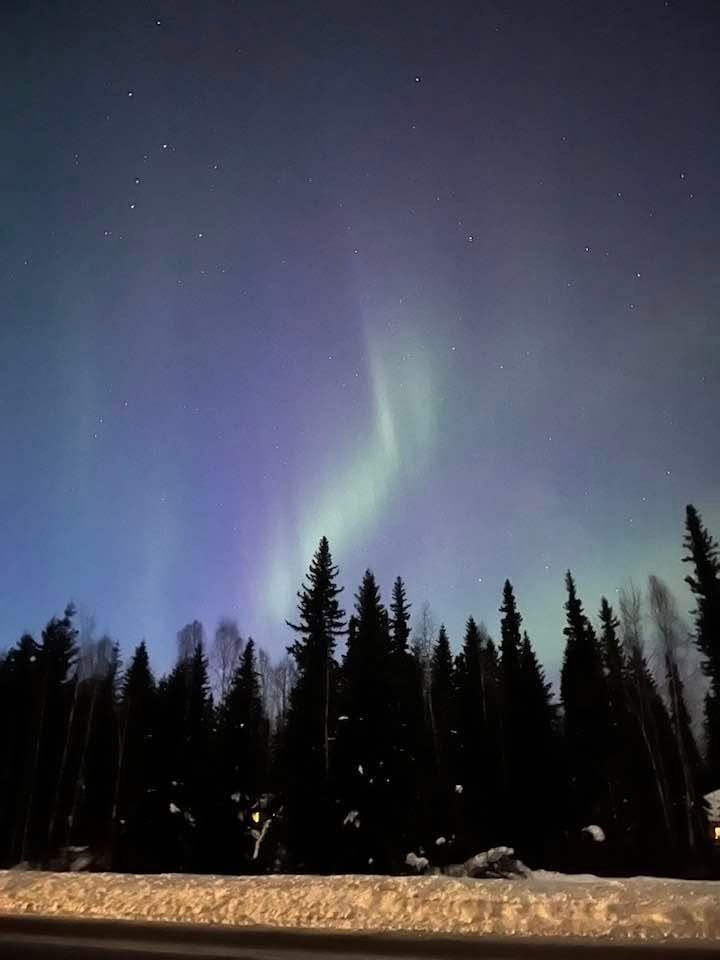
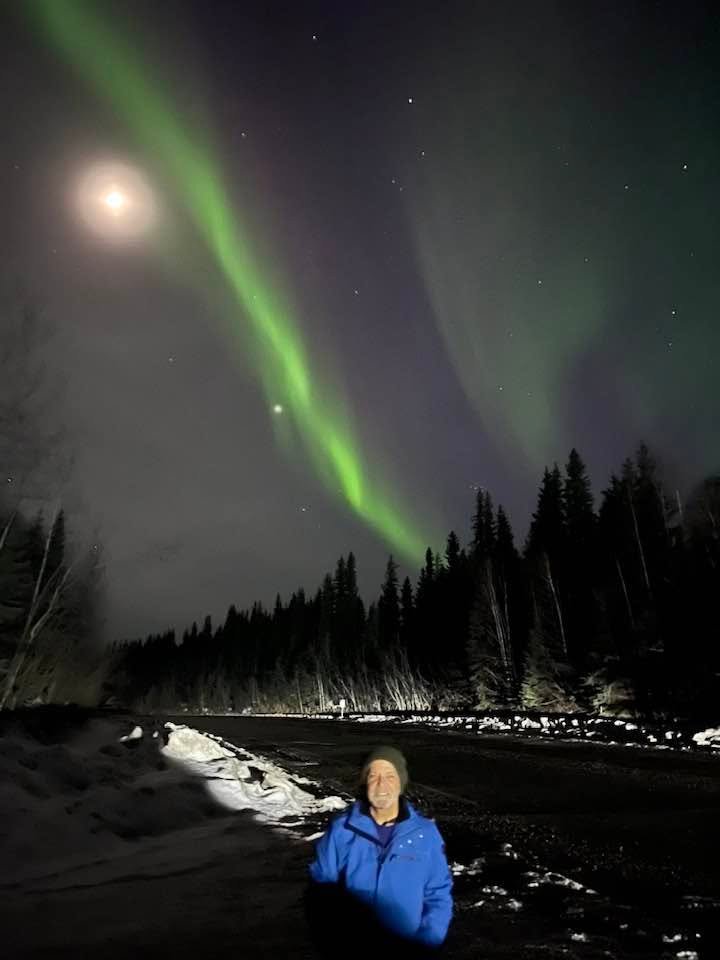
Fairbanks (Ester), Alaska, USA
(March 10, 2022; 9:19 PM)
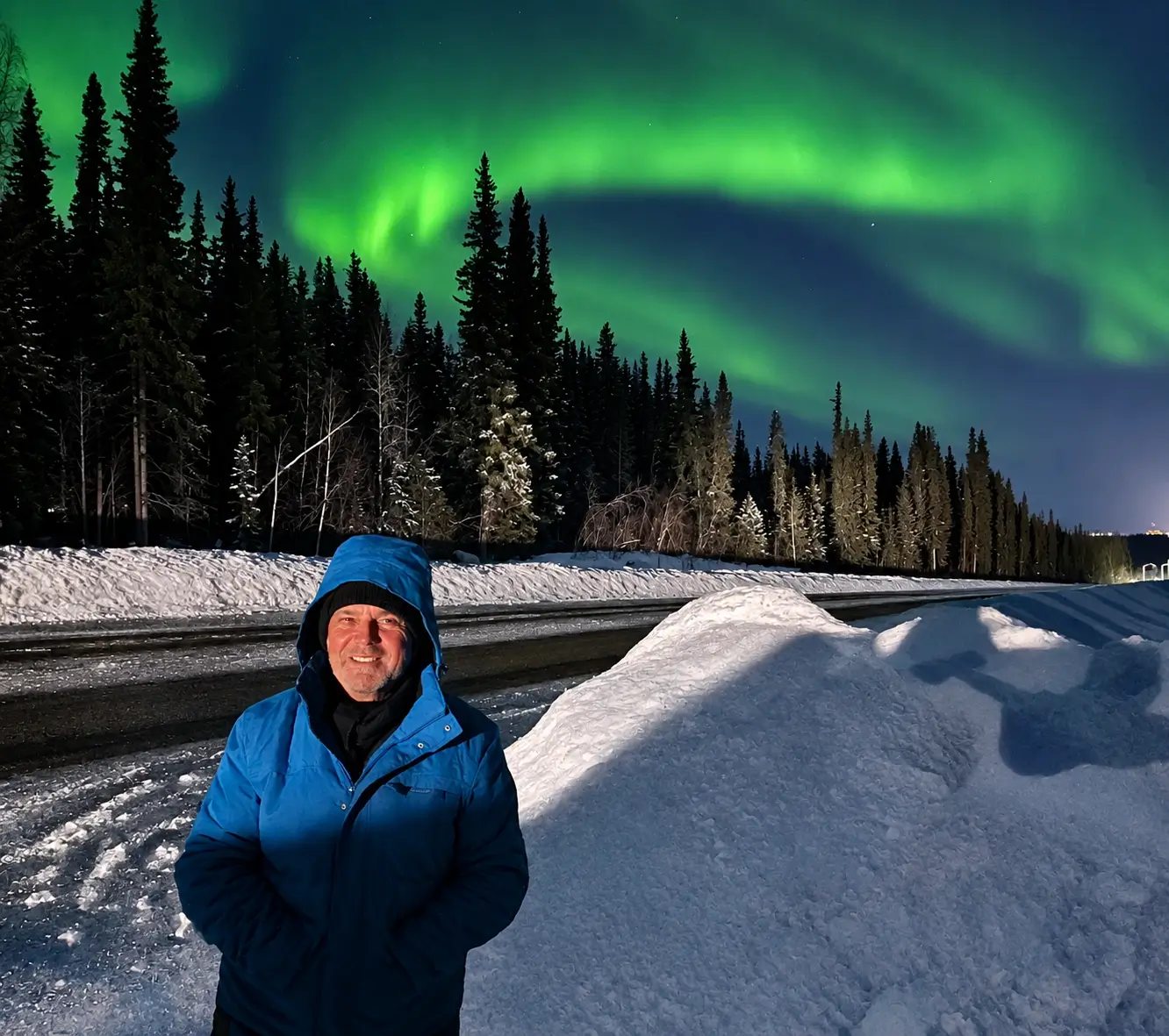
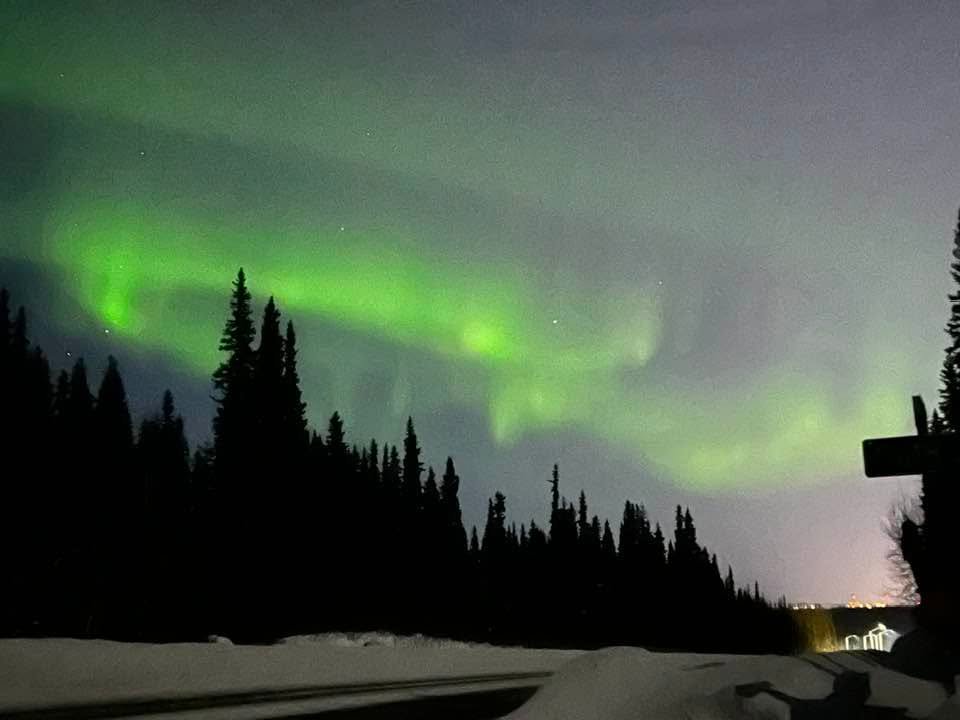
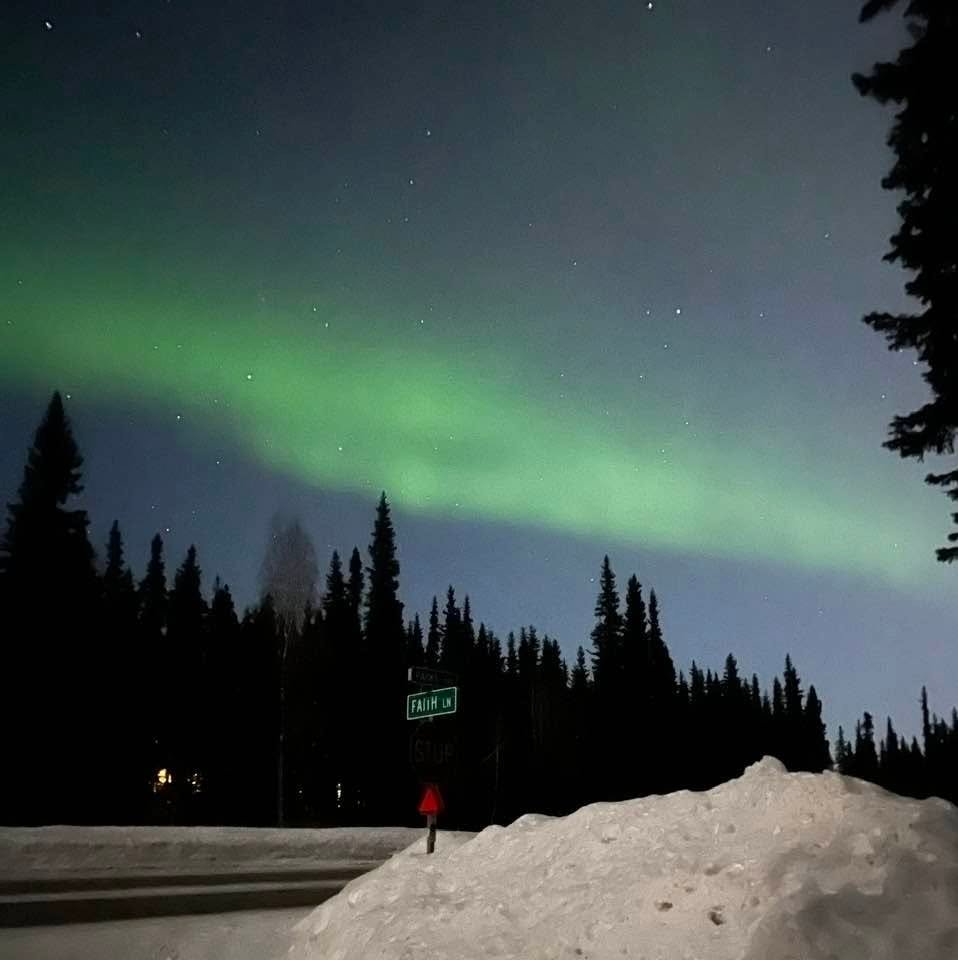
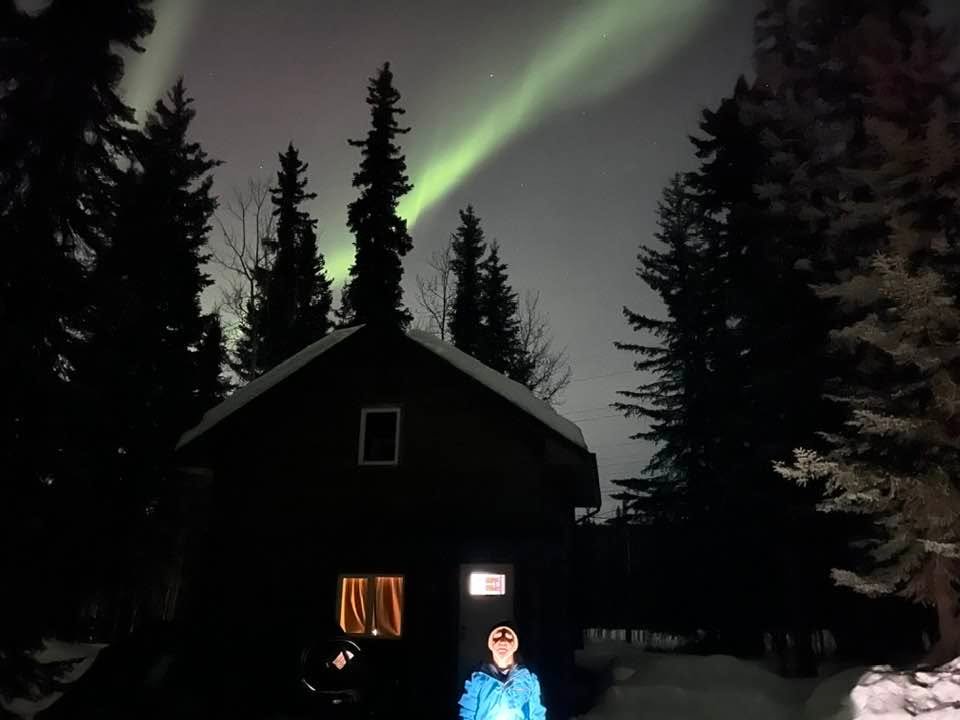
The Lights were very active early that night. We had lots of trees around our cabin, so we walked to the nearby highway to have more open sky. There was very little traffic — it was after 9 p.m., it was Alaska, and it was cold!
Using a flash to light up a person can wash out the Lights in the background. For the first photo, we waited until an approaching car lit us up. Notice how the color of the Lights in that photo differs from the others.
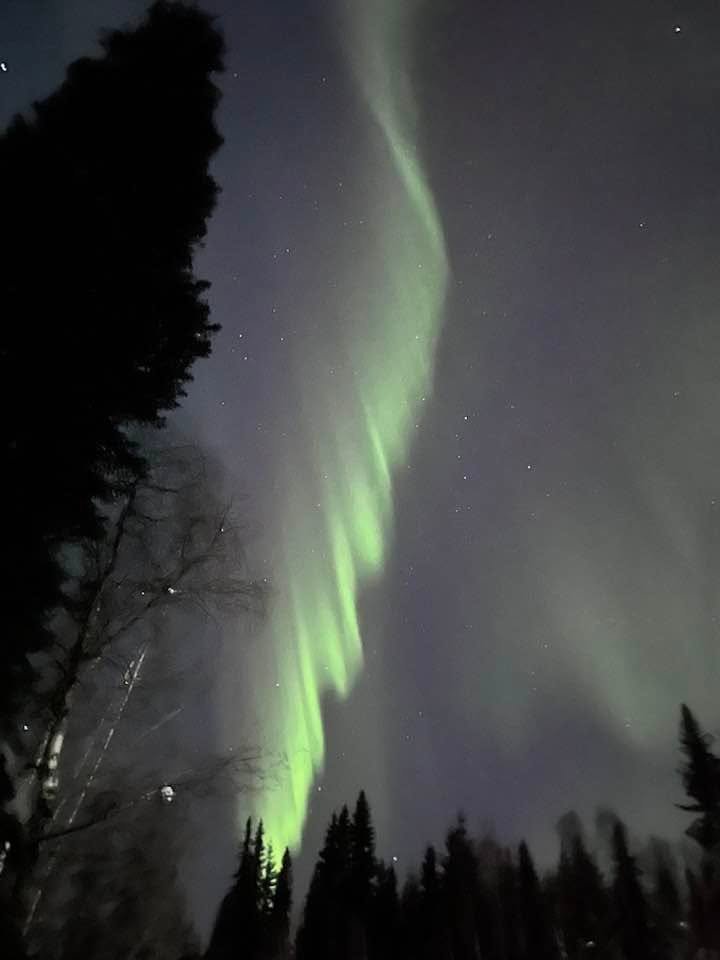
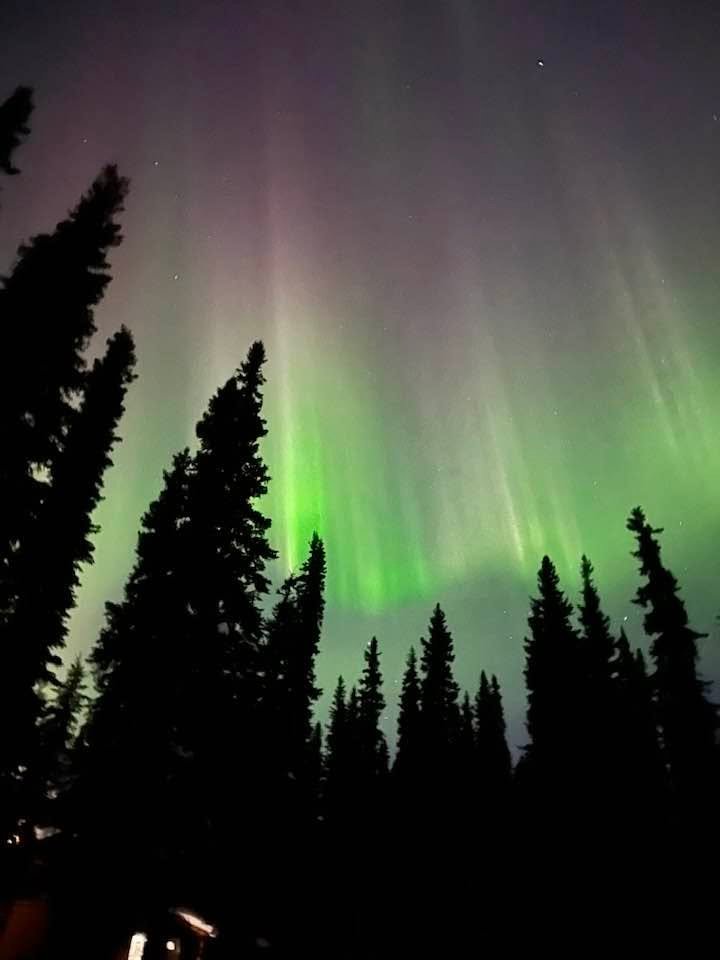
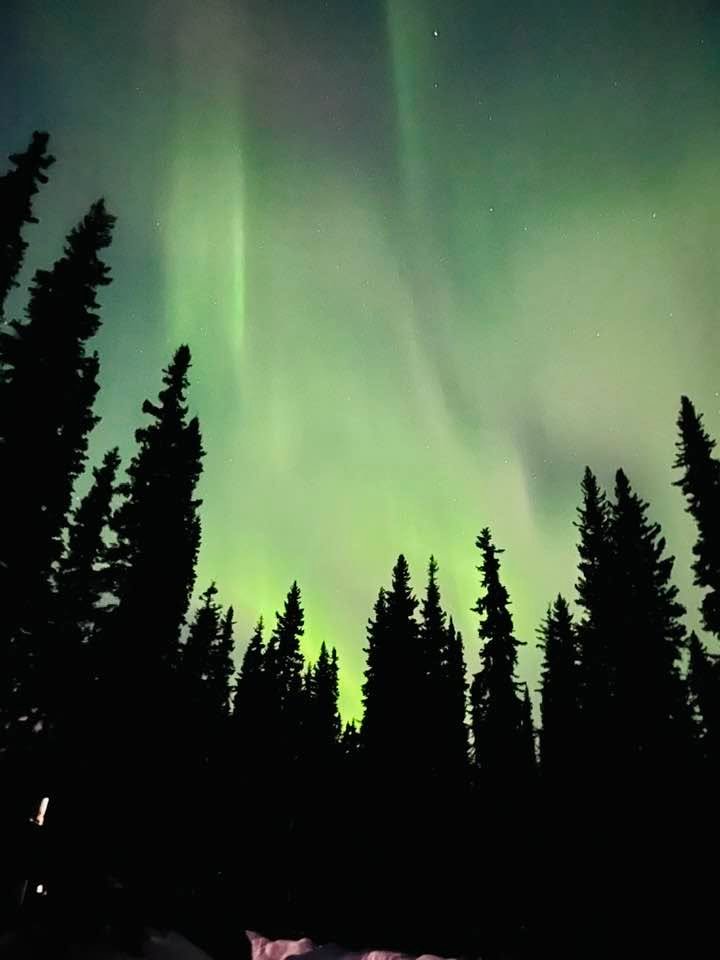
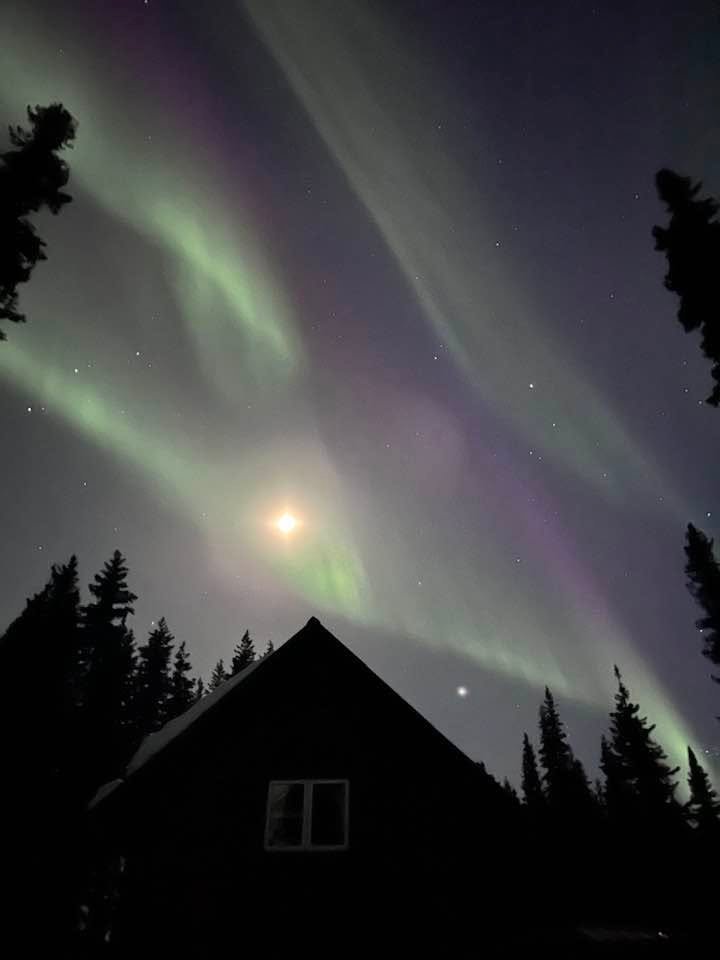
Fairbanks (Ester), Alaska, USA
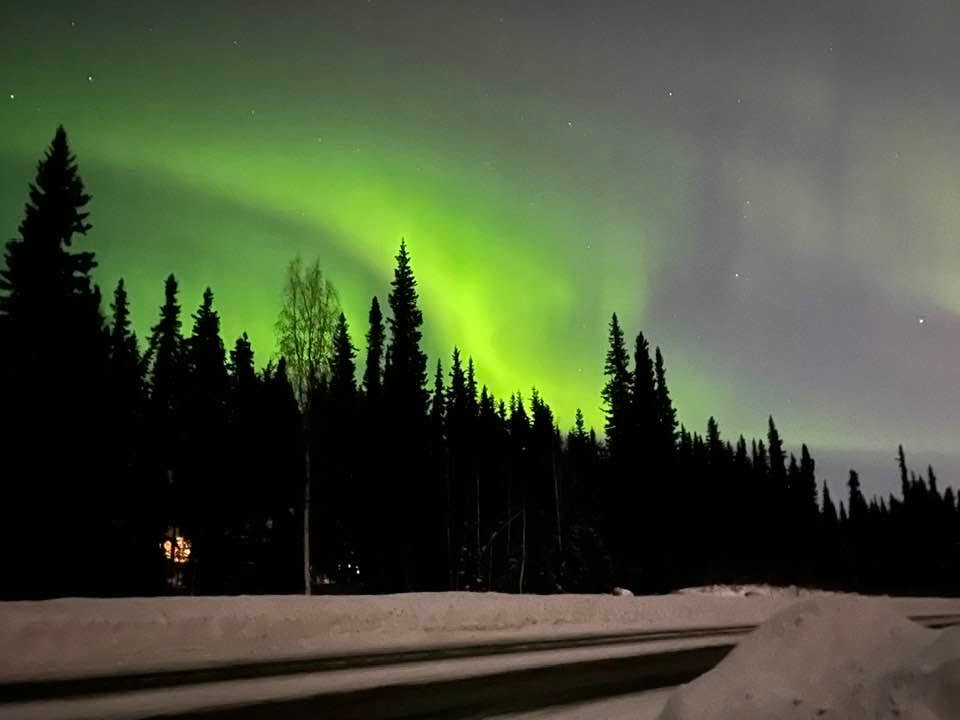
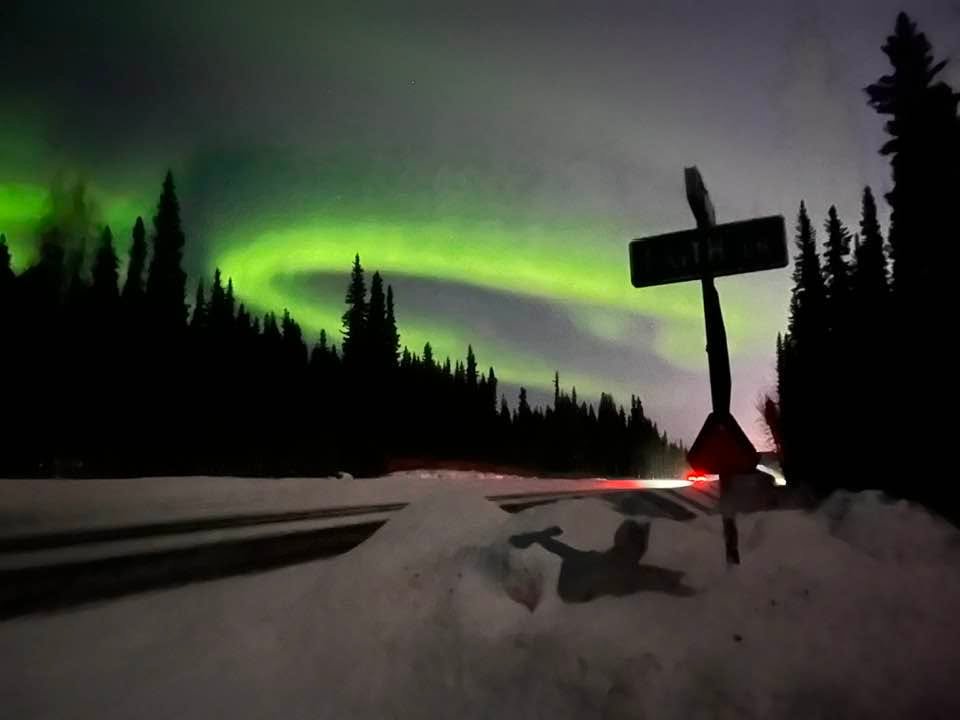
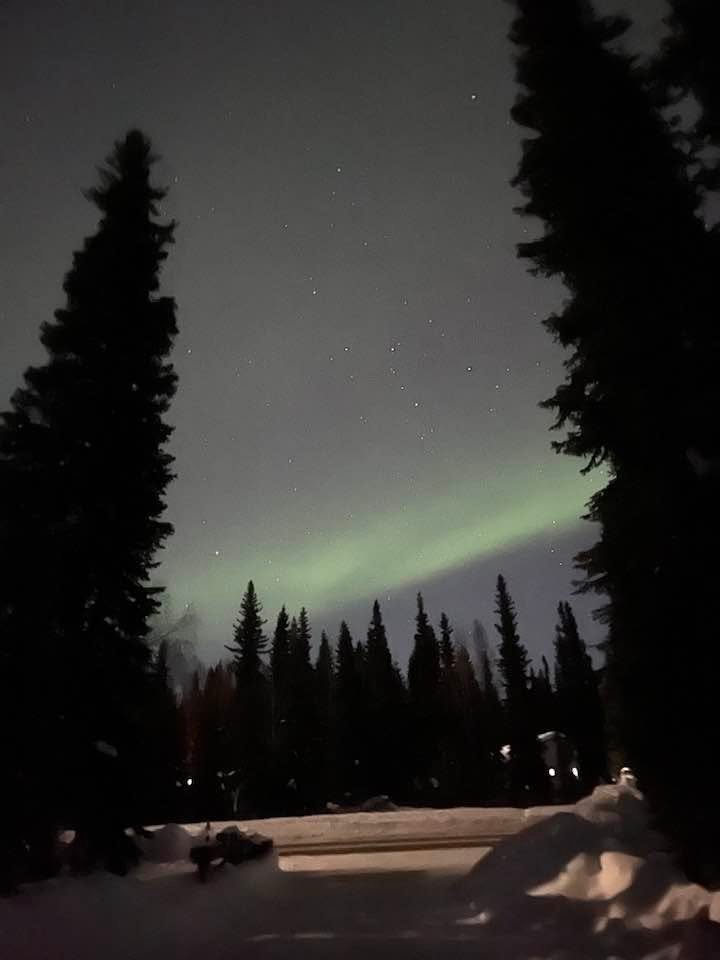
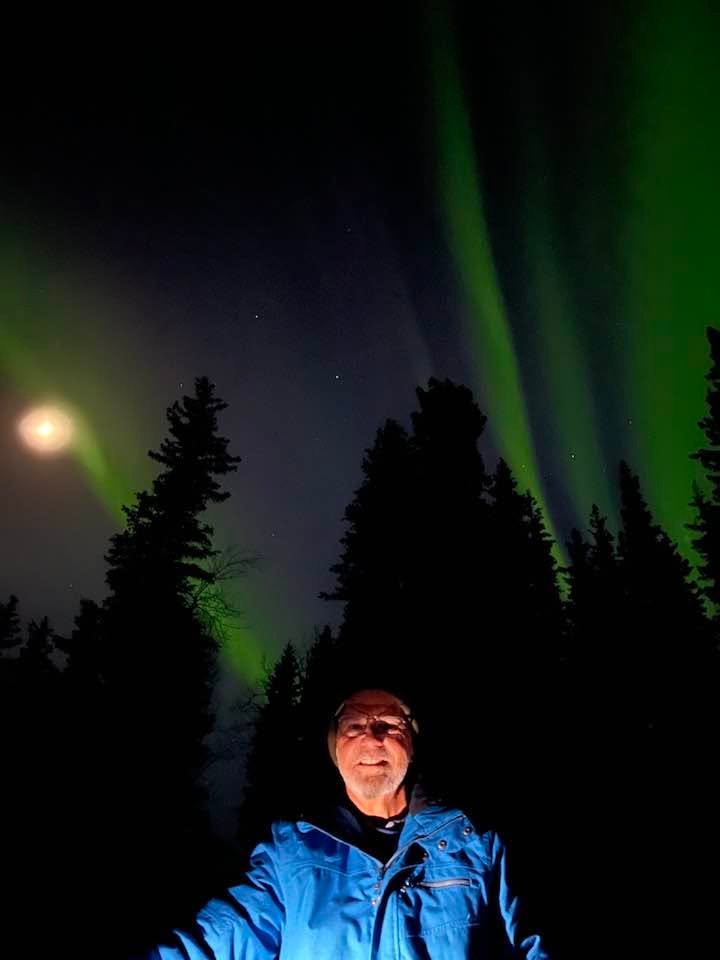
(March 10, 2022; 9:45 PM)
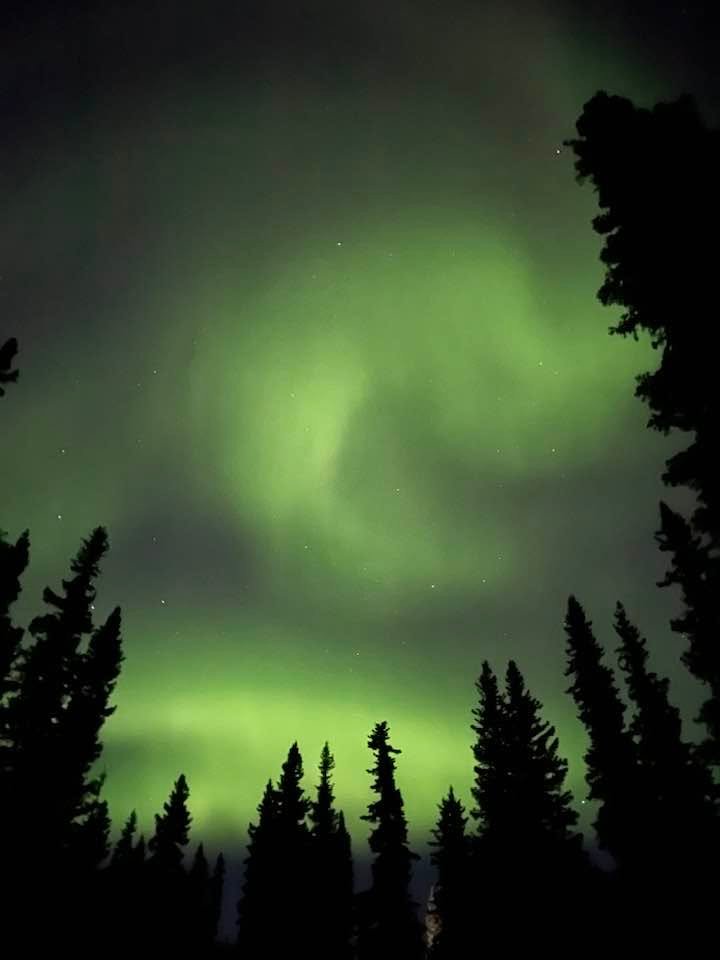
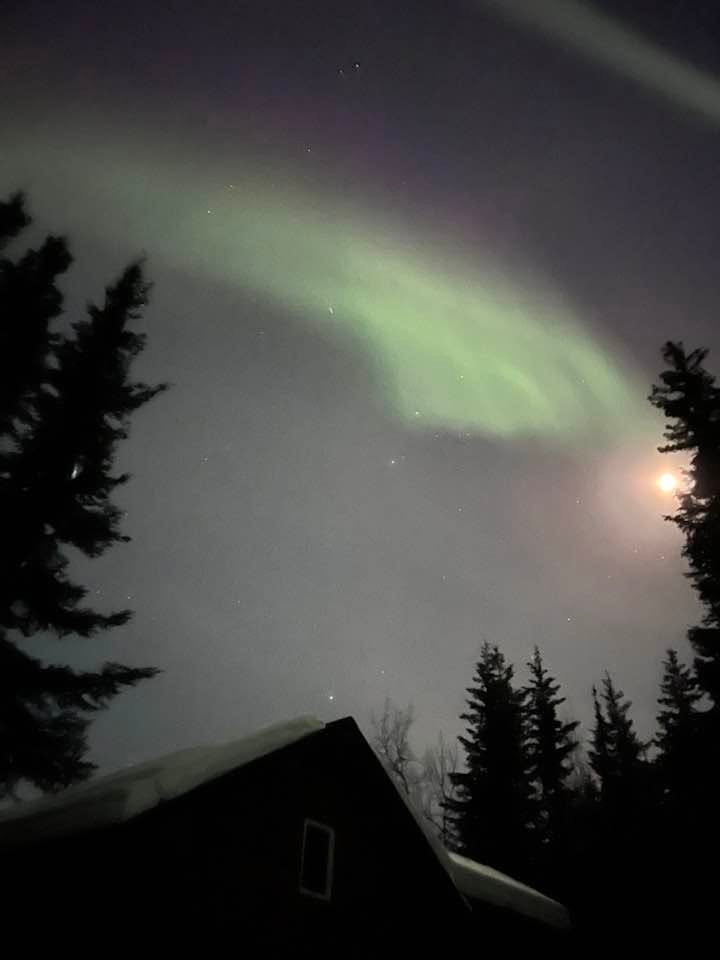
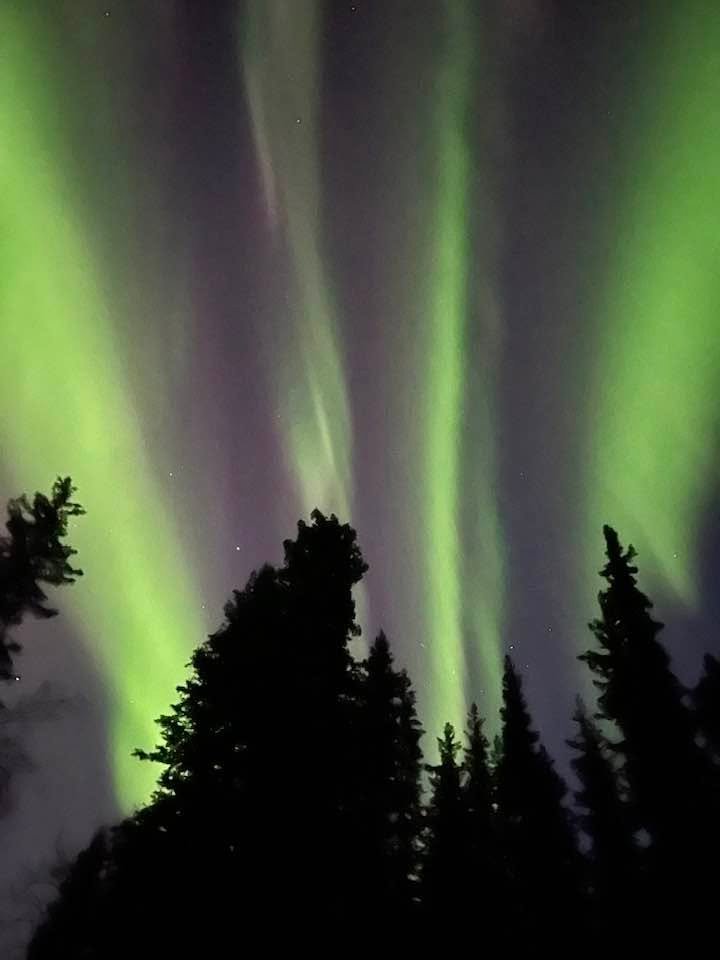
It was really cold, so we walked back to our cabin. Just a few minutes later, I stepped outside and took these photos right above it. In the second photo, you can see vertical streaks in the Lights. Imagine watching those move!
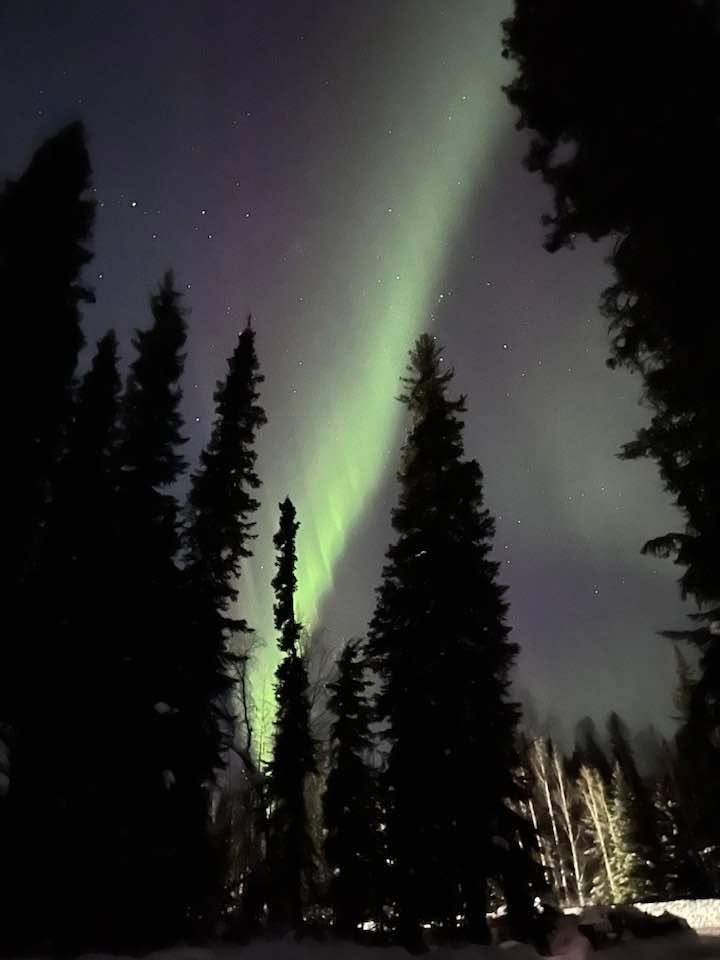
Fairbanks (Ester), Alaska, USA
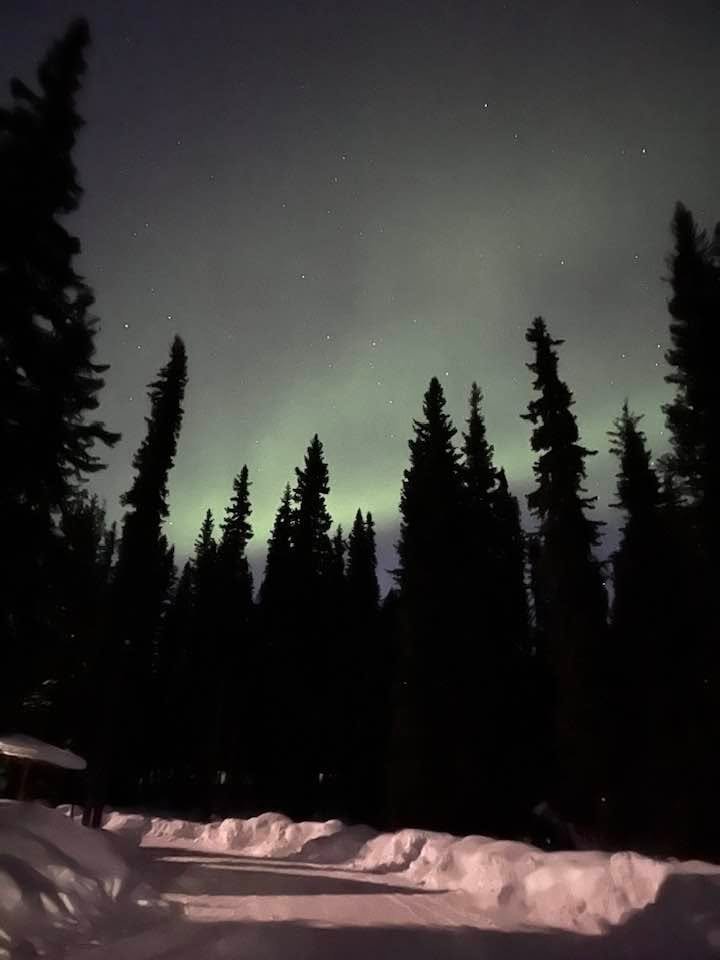
(March 12, 2022; 1:06 AM)
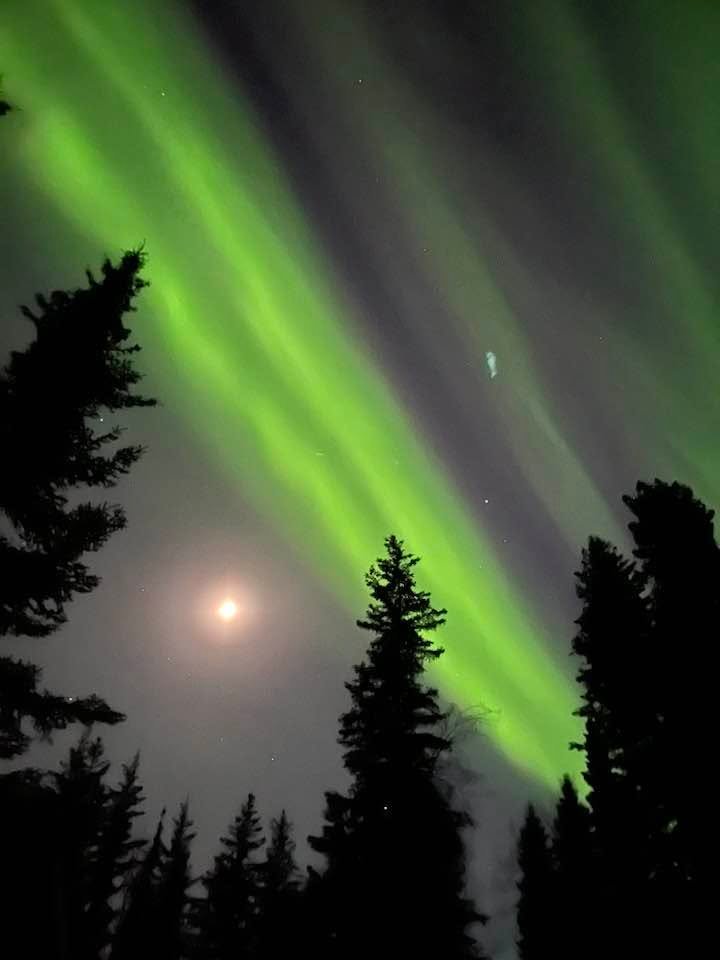
An app on my phone indicated a good chance of auroral activity in our area, so I went outside. I was excited to see these beautiful green Lights. Look at how clear the sky was. You can even see some of the stars. The ground looks bright because moonlight was reflecting off all that snow.
Fairbanks (Ester), Alaska, USA
(March 11, 2022; 8:29 PM)
The lights were very active early that night. We had lots of trees around our cabin, so we walked to the nearby highway. There was very little traffic — it was after 9 p.m., it was Alaska, and it was cold!
Using a flash to light up a person can wash out the lights in the background. For the first photo, we waited until an approaching car lit us up. Notice how the color of the lights in that photo differs from the others.
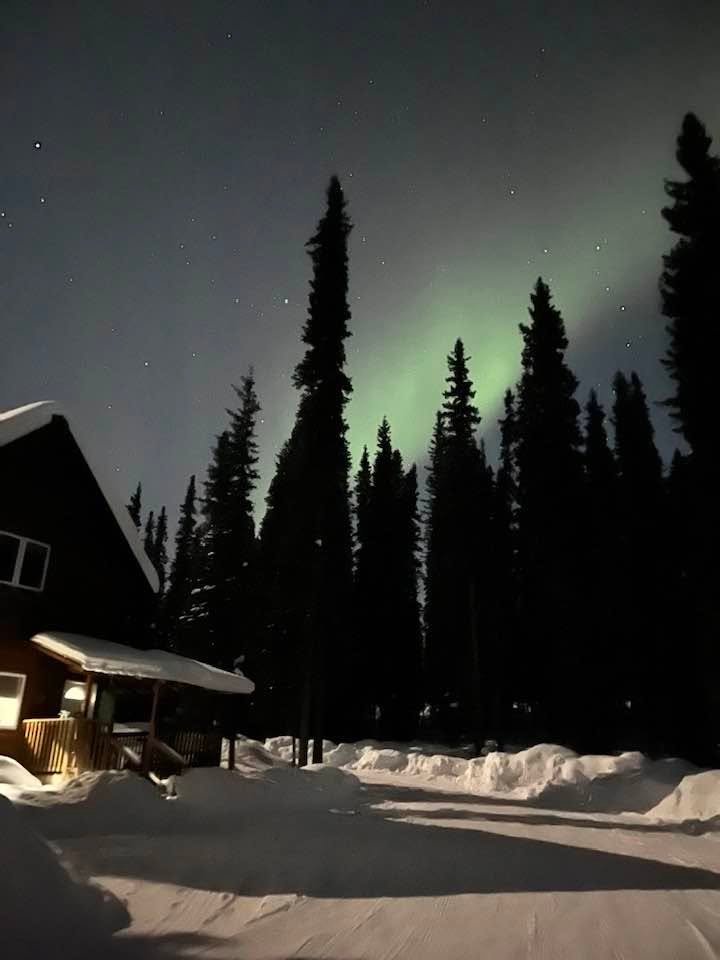
Fairbanks (Ester), Alaska, USA
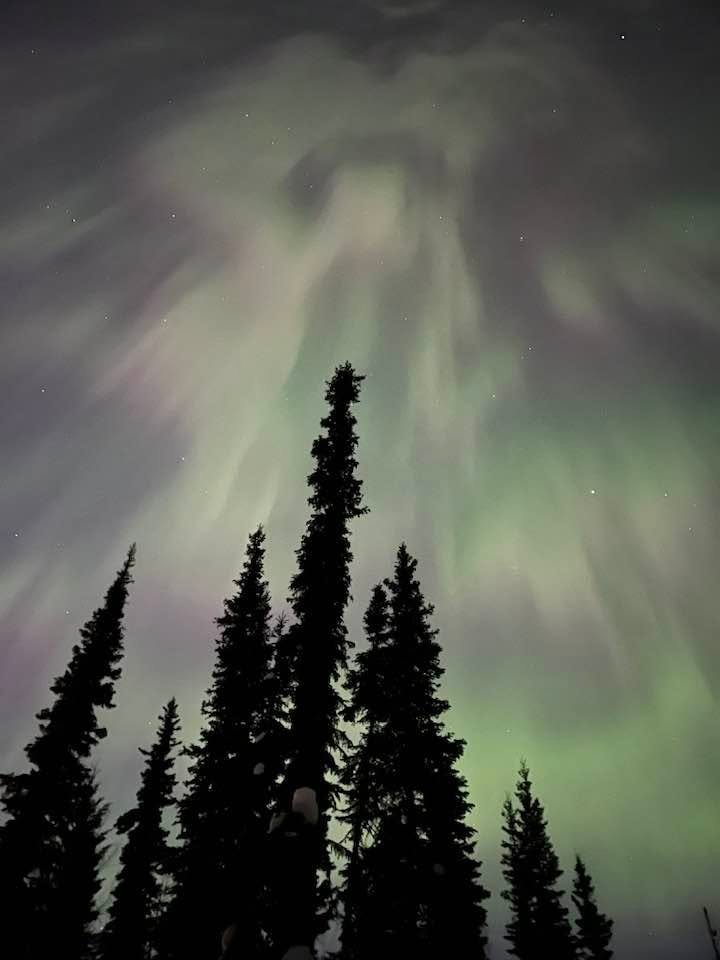
(March 12, 2022; 5:40 AM)
As I often do on aurora trips, I stayed awake all night. We had already seen Lights, but I kept checking my apps and going outside. It was very dark, very quiet, and very cold. At 5:40 a.m., I walked out in front of our cabin, looked straight up, and saw these beauties.
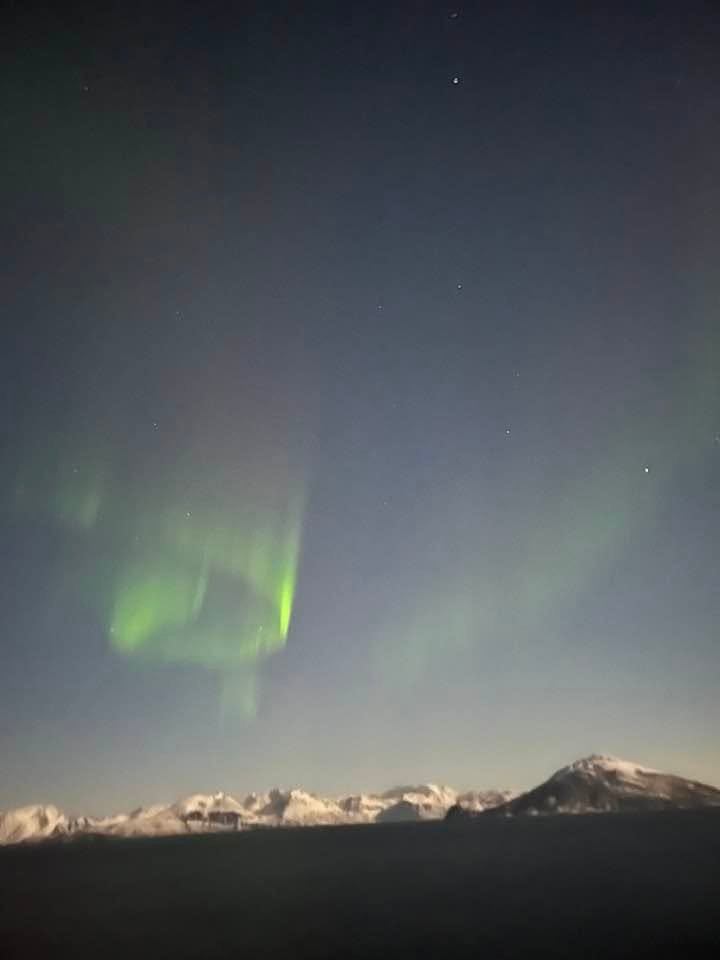
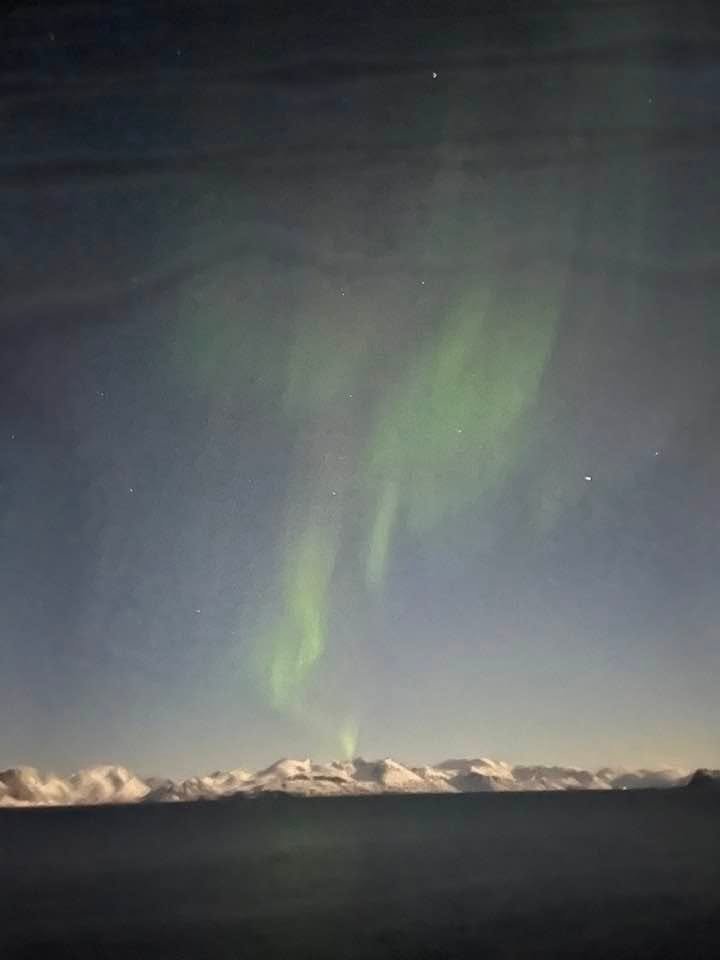
I can’t do justice to how magical it feels to see something so awe-inspiring. Wow!
Alta, Norway
(January 14, 2018; 9:03 PM)
Look at a map of Norway to see how far north Alta is. We took four flights over two days to get there. It was only about 3:30 p.m., but it was already completely dark when we got a taxi to our place overlooking Alta Fjord.
We had little luck on this trip, but on our third night, we saw these rather faint Lights in the distance. Some people look at these photos and ask why I didn’t make the colors brighter. I left them as they were because I want you to see that not every aurora looks like the spectacular displays you see on social media. This one was faint, and I was still quite excited to see it!
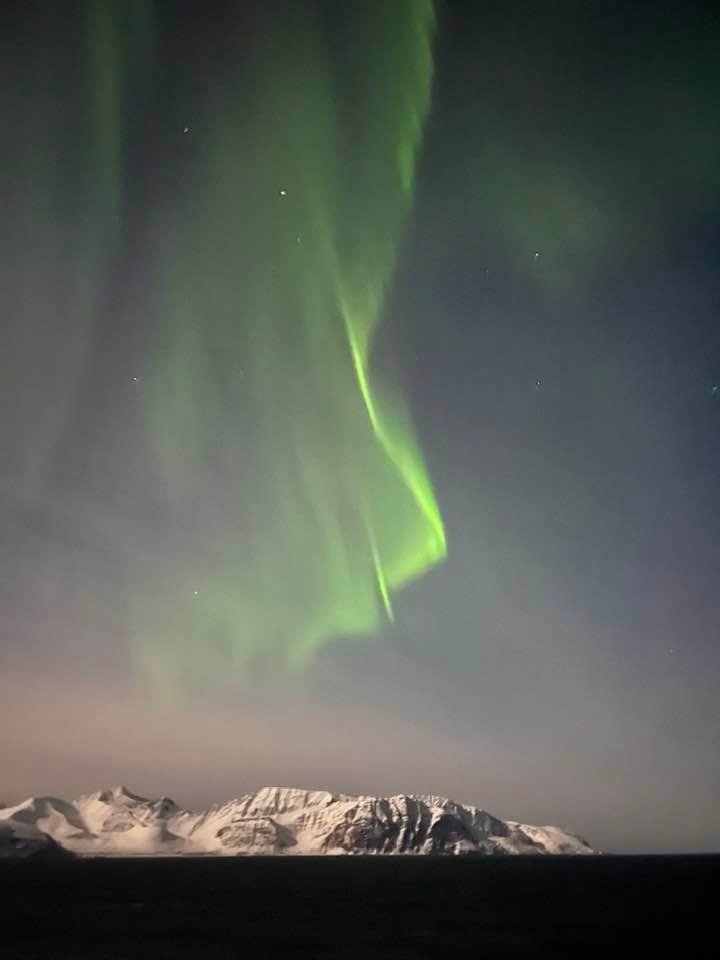
Seglvik, Norway
From our moving cruise ship.
(March 2, 2026; 11:11 PM)
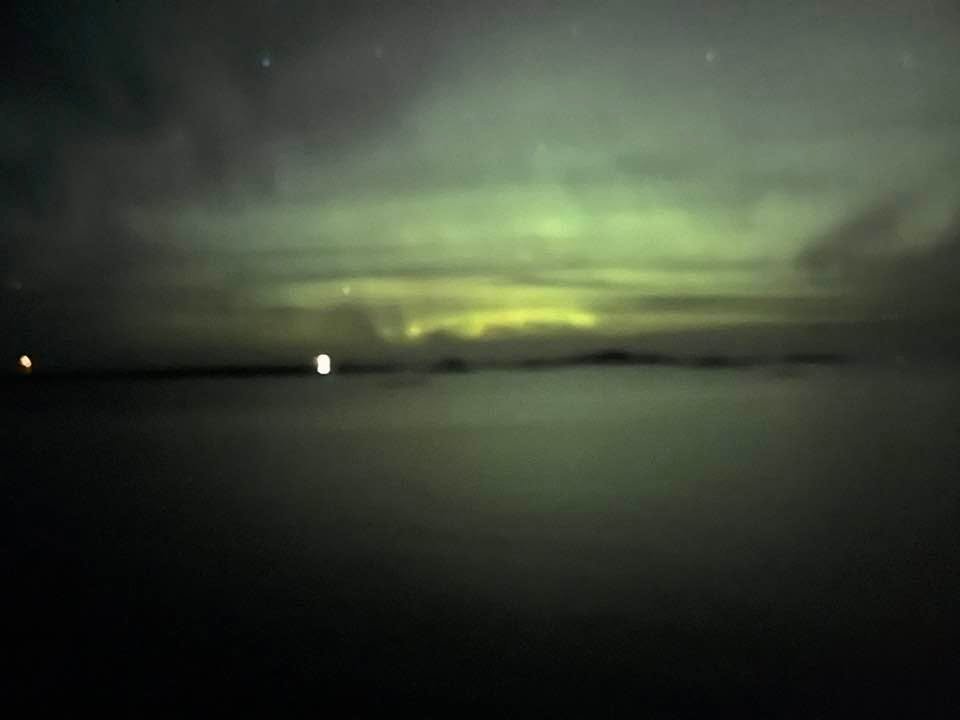
I hope you’ll click on each photo here to see the whole image. These were taken from our Havila cruise ship on a trip from Bergen to Kirkenes and back.
I highly recommend this kind of cruise if you are serious about seeing the Lights. On our ship, an announcement let us know when they were visible. Then we just had to bundle up and head out on deck to watch the incredible show.
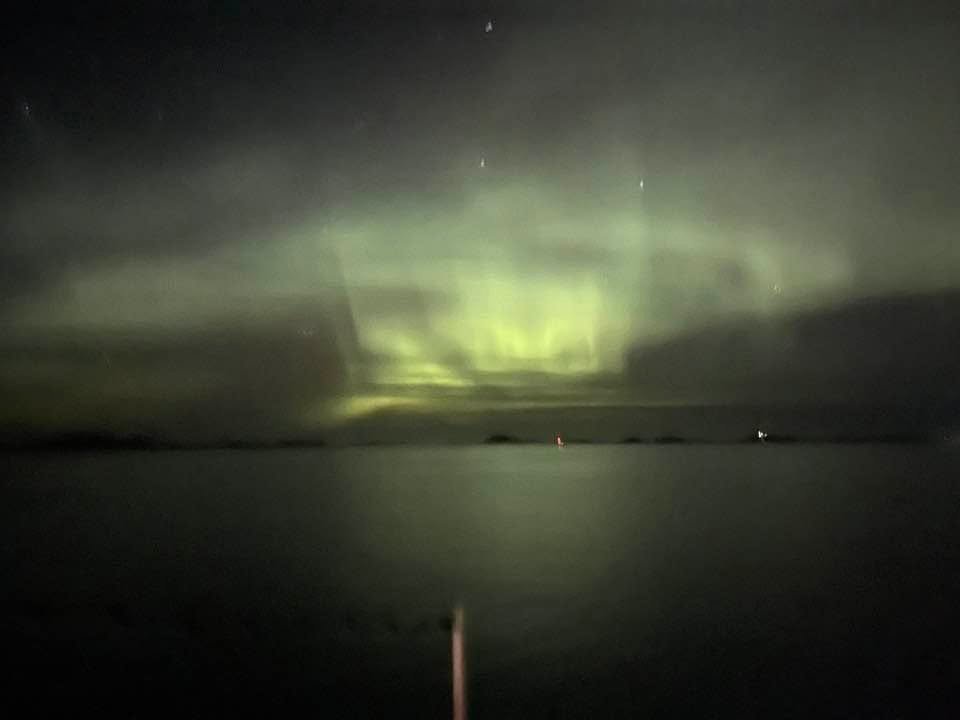
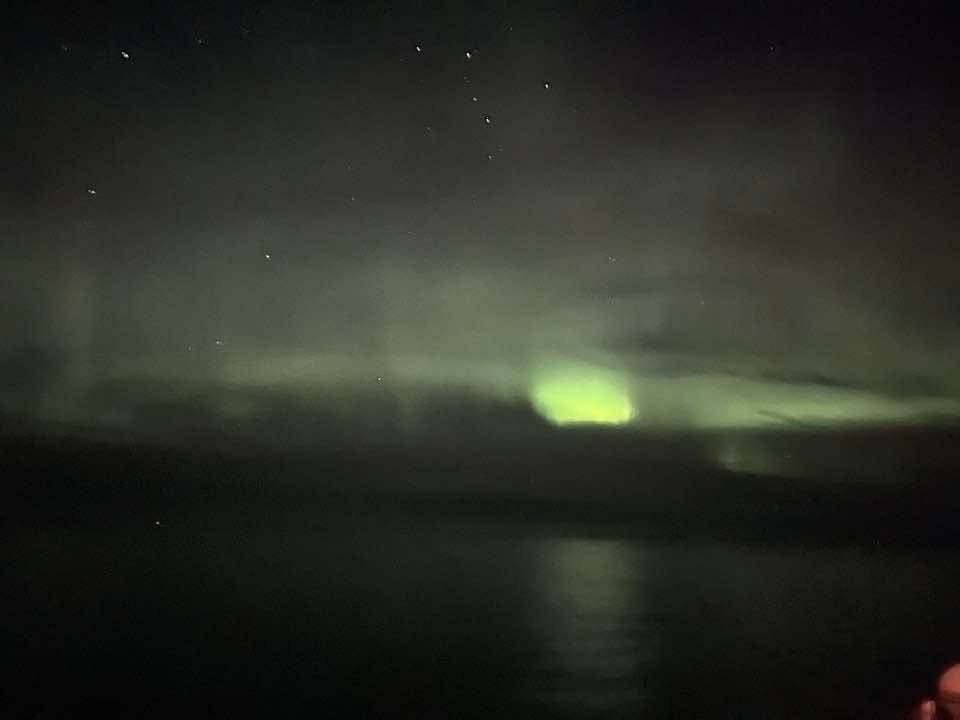
Near Roan, Norway
From our moving cruise ship.
(March 8, 2026; 1:26 AM)
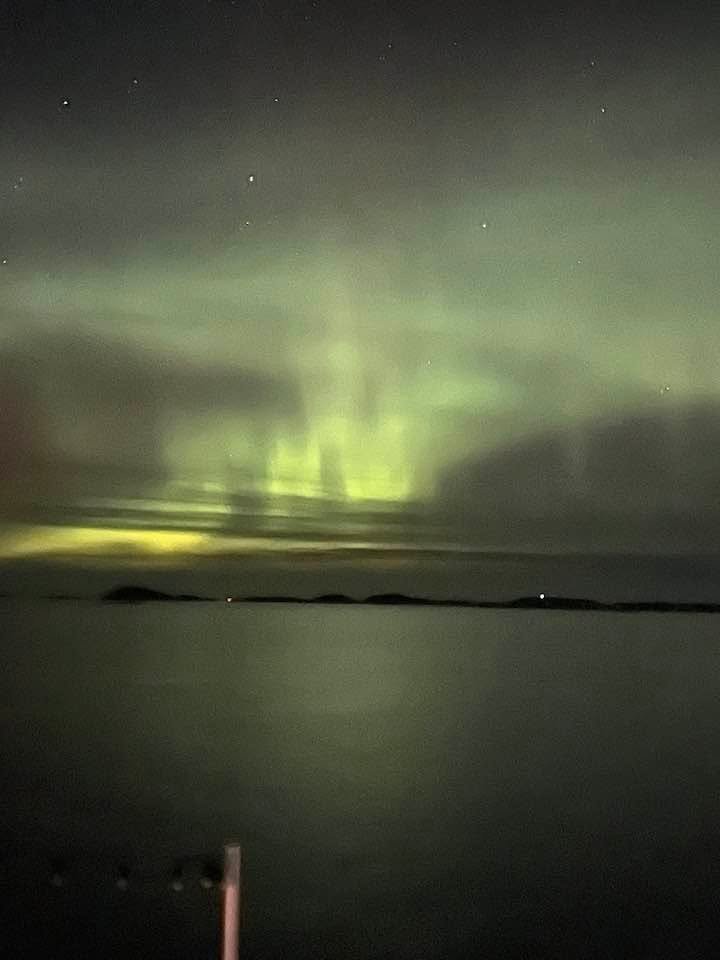
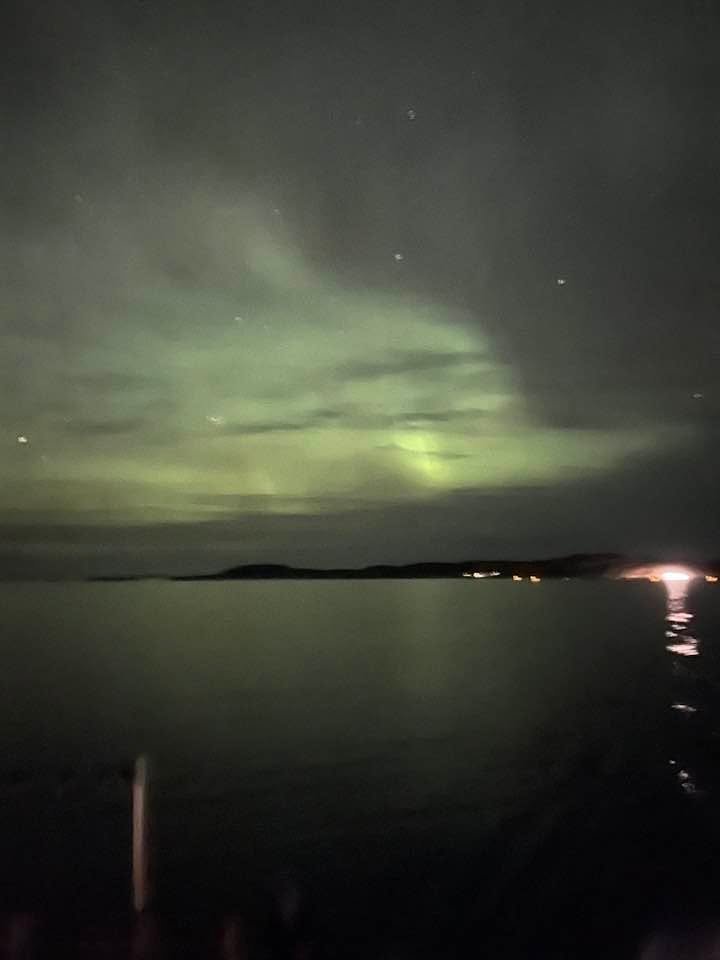
The sky was so cloudy around dinnertime that I didn’t have much hope of seeing the Lights that night. However, the aurora announcement came at about 1:15 a.m., and we rushed to put on enough clothing to handle the cold up on deck.
It was still pretty cloudy, but the Lights were out! The seas were rough, and the ship was moving quite a bit, so these images are a little blurry.
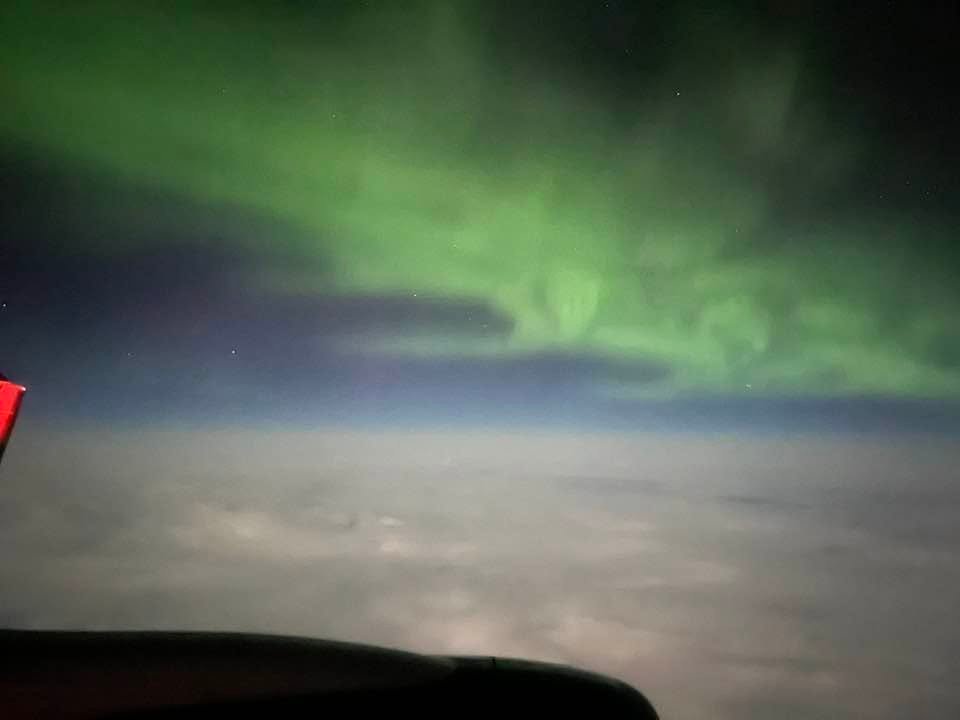
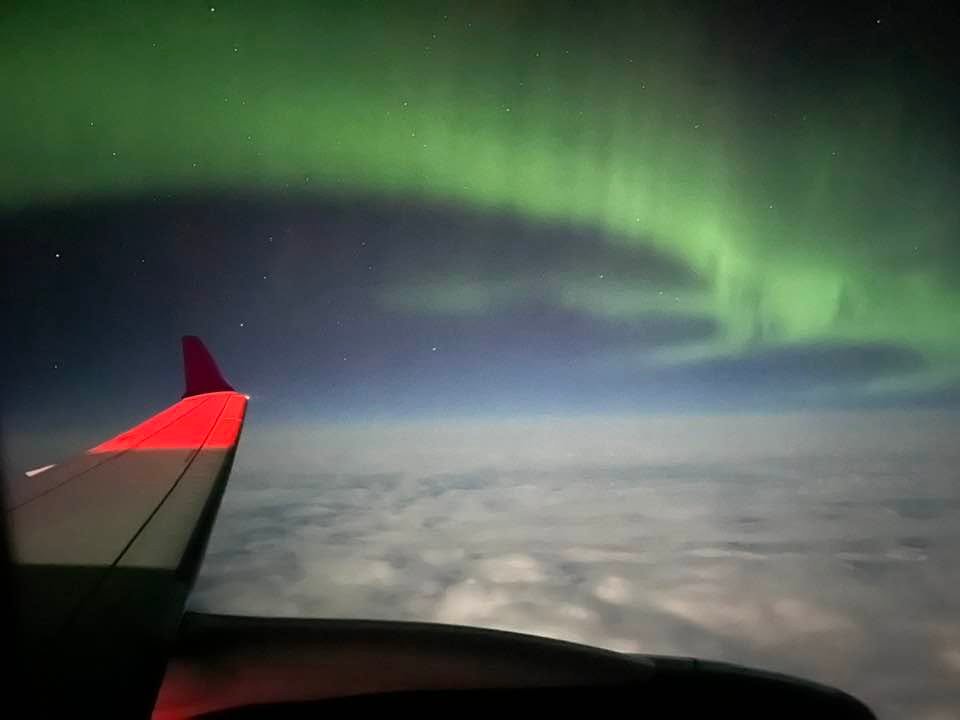
Near Prince Rupert, British Columbia, Canada
From our flight home.
(April 9, 2025; 3:30 AM)
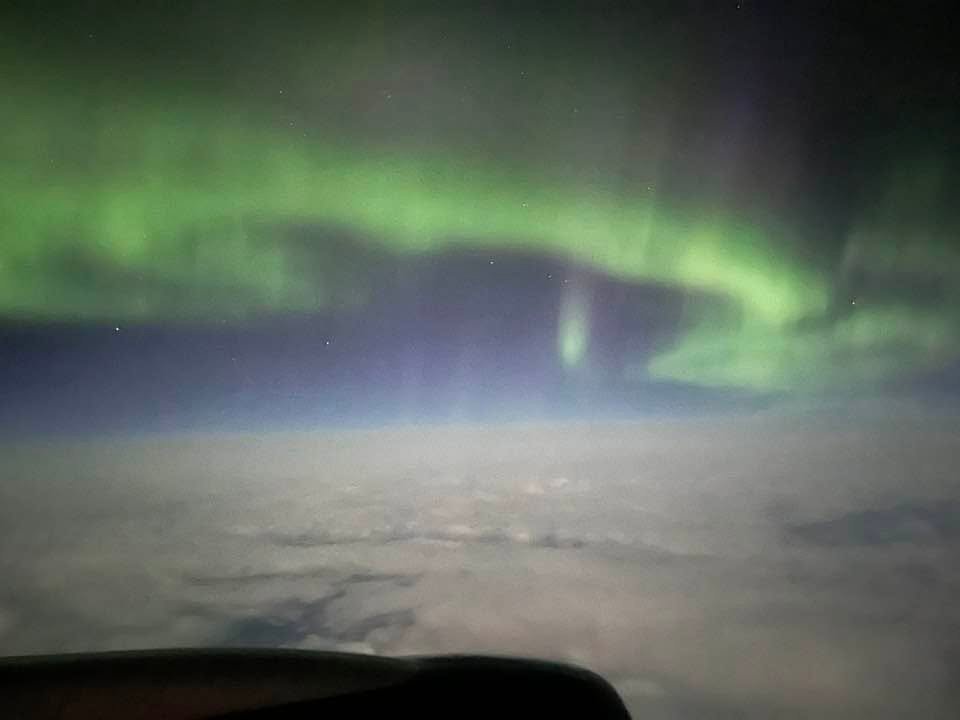
These photos were taken from our flight home. If you’re flying east, a window seat on the left generally gives you a view toward the north. If you’re flying west, try the right side. Of course, it depends on the route your plane takes.
The windows near my seat were tinted, so I found a clear window near an exit and took these photos.
Now here is the lesson: I did NOT see any Lights with my eyes that night. My camera picked them up. A camera can capture faint light that our eyes miss, so an aurora can look much more vivid in a photo than it does in person—even without editing.
Fairbanks (Ester), Alaska, USA
(April 3, 2025; 11:27PM)
Early April in Fairbanks, and what an amazing show! In the first photo, an approaching car’s headlights lit up my face. In the last two photos, I tried using my phone’s light to illuminate my face while someone else took the picture with the Lights behind me.
Videos
Near Fairbanks, Alaska
(April 9, 2025; 3:30 AM)
Videos are tricky. For a photo in the dark, a camera can gather light over several seconds. You need to hold it steady while it does that—not an easy task.
Video works differently, and a faint aurora can be much harder to capture. That night’s show was pretty, but it wasn’t very intense. I enjoyed watching it, even though getting a good video was a challenge.